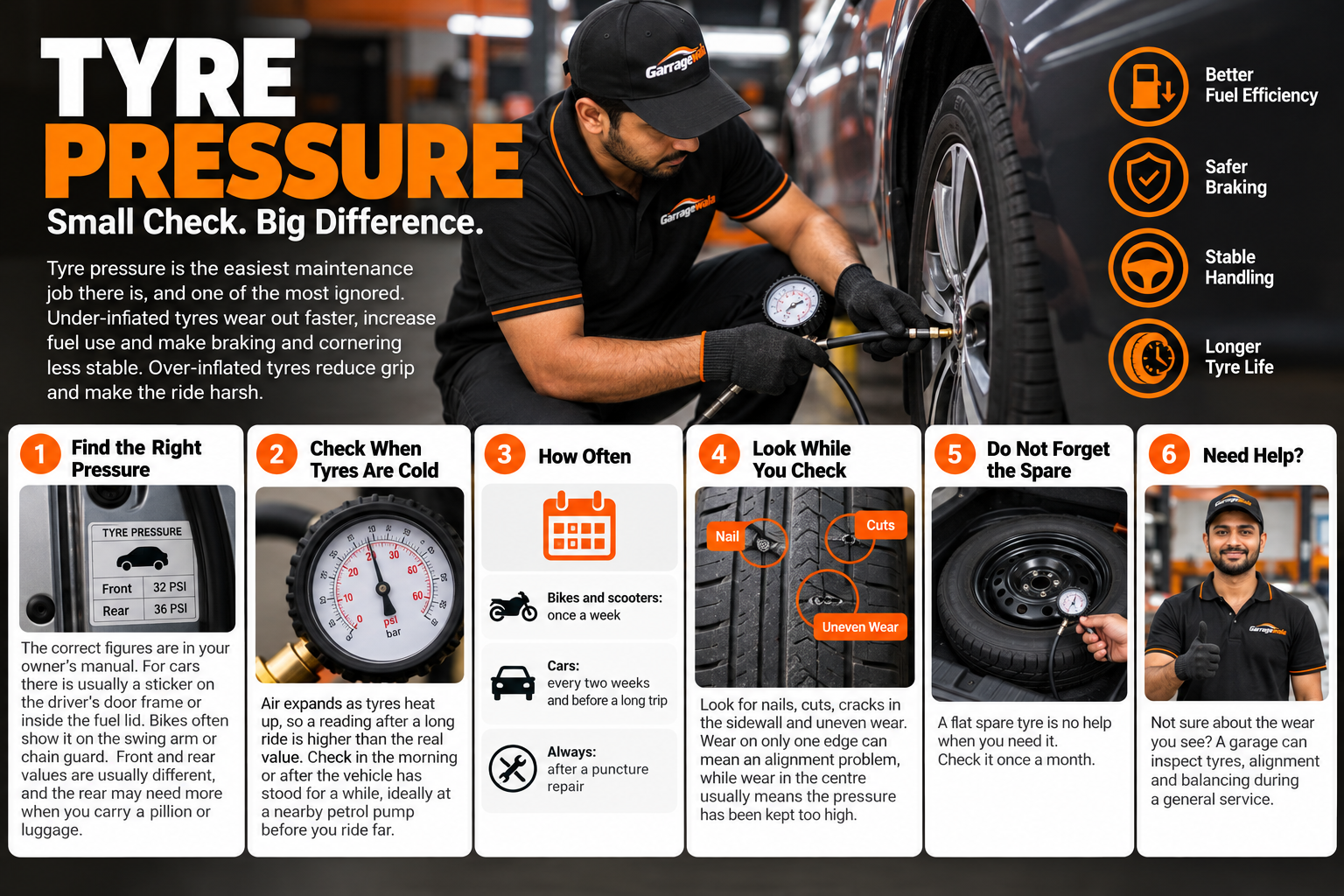
Tyre pressure is the easiest maintenance job there is, and one of the most ignored. Under-inflated tyres wear out faster, increase fuel use and make braking and cornering less stable. Over-inflated tyres reduce grip and make the ride harsh.
Find the right pressure
The correct figures are in your owner's manual. For cars there is usually a sticker on the driver's door frame or inside the fuel lid. Bikes often show it on the swing arm or chain guard. Front and rear values are usually different, and the rear may need more when you carry a pillion or luggage.
Check when tyres are cold
Air expands as tyres heat up, so a reading after a long ride is higher than the real value. Check in the morning or after the vehicle has stood for a while, ideally at a nearby petrol pump before you ride far.
How often
- Bikes and scooters: once a week
- Cars: every two weeks and before a long trip
- Always: after a puncture repair
Look while you check
Look for nails, cuts, cracks in the sidewall and uneven wear. Wear on only one edge can mean an alignment problem, while wear in the centre usually means the pressure has been kept too high.
Do not forget the spare
A flat spare tyre is no help when you need it. Check it once a month.
Not sure about the wear you see? A garage can inspect tyres, alignment and balancing during a general service.